Making your skin look great without surgery and the options

July 8th, 2009

All of these options can help you maintain your skin without surgery.

Fillers: when you age you lose volume and replacing this volume can do wonders to fill in the facial contours.  This can get rid of general wrinkles and highlight the face in ways to bring youth to the face.  Restylane, Juvederm, Perlane are hyaluronic acids and last from 6 months to a year or more.  Radiesse is made out of bone and is very compatible and will last about a year.  Artefiill is polymethametacrylate microspheres and is a permanent filler that is FDA approved for the nasolabial folds and can basically last permanently.

Resurfacing: is a way to remove wrinkles, make pores smaller, take away unwanted pigmentation and tighten the skin.  Chemical Peels, co2 laser resurfacing, dermabrasion, aggressive microdermabrasion, fractionated lasers can all do this to some degree.  They can be tailored to fit your lifestyle and schedule.  This is the only way to really improve the etched in wrinkles on the surface aspect while fillers can help do this from a deeper level.  Fillers however will not change the surface charateristics as much as resurfacing modes can.

Retin A: can reverse skin damage, decrease your chances of skin cancer, improve fine wrinkles, decrease unwanted pigmentation in mild to moderate degrees.  This is a topical medication and is available through prescription only.  Retin A can also help with Acne as well.  It is also used to prepare the skin for laser resurfacing.

IPL: Intense Pulse Light is light that is concentrated and filtered to allow a selected range of light to target pigements, brown spots, and vessels and the red spots they create.  There is essentially no downtime with this treatment.  It can also tighten your skin to a small degree.  The reduction of the spots can really make your skin look clear and younger

Botox/Dysport: makes the muscles in your face weak whereever its injected. When the muscles are weak they can’t make wrinkles with the expressions.  Botox can be injected in a directed manner to reduce the appearance of wrinkles!

Skin care is vital. Your skin protects your face and allows it to look the way it does.  When you wash your face with harsh chemicals or expose it to the environment in a extreme way it will react with redness and hyperpigmentation.  Washing with a gentle cleanser and only once a day max will help.  Tanning is a no no and you should always wear sunscreen and apply it all the time.  Staying out of the sun is also important.

Dr Young is located in Bellevue near Seattle, Washington

Approach to small pox scars through excision, resurfacing and hair transplantation?

July 8th, 2009

Small pox scars are a lot like Acne Scars. The pox scars can appear very differently in people.  Depressed scars can be excised or they can be elevated and then resurfacing can then be done.  Excision of the scars will likely need two stages.  You would need to excise them at the first stage and then allow them to heal. At 6-8 weeks or later, we can then do the resurfacing procedure to smooth over the incision from the excision.  If you want to do it in one stage, you can elevate the scars through punch excisional techniques where the depressed scar is incised completely around it and then elevated so that the skin is at the same level.  Once this is done with all of the depressed scars you can then resurface the face or area at the same time.  Results can be as good as the two stage approach.  When the scars are raised, you can use resurfacing techniques to lower the raised portion and then the area can be healed over by the migrating cells.  Hair transplantation can help but they can be placed in areas that you might not want hair located at.  You have to make sure you don’t mind hair in the area that you transplant hair.  With the above techniques you may not need hair transplantation given the excellent results that you can attain. Here is a live demonstration of my use of a co2 laser and laser resurfacing.

Dr Young is located in Bellevue near Seattle, Washington

What to do about a bad result after a rhinoplasty?

July 8th, 2009

This is a question that I answered for someone who had aRhinoplasty done by another surgeon:

A bad nose job really depends on how long ago it was done.  Right after surgery, your nose usually doesn’t look very good. The swelling and the bruising usually distorts the area so that it really won’t look like it should for weeks to months.  This especially occurs in the tip area. Sometimes, after your rhinoplasty, results that are not going to turn out as promising can be determined.  Usually they are very obvious things like a deviated nose still appearing deviated after the procedure.  Or the bump over your nasal bridge is obviously still apparent.  One thing to know is that the tip area takes the most time to refine itself.  The swelling in this area takes patience for it to go down.  Your doctor will consider steroid injections and oral steroids to help this in some cases but using steroids can be a risky thing to do especially if it is not injected deep enough.

Don’t worry though. There are a lot of great surgeons out there that can improve almost any situation in the nose from a prior rhinoplasty.  It might take some work but there are options to improve the situation.

Dr Young is located in Bellevue near Seattle, Washington

What is Intense Pulse Light Treatment?

July 8th, 2009

Intense Pulse Light can treat sun spots, small veins, rosacea, and other forms of skin discoloration.  This machine uses light to target your pigment and blood within your skin while sparing the other structures of the skin for less down time. You usually need 3-4 treatments to be fully effective often times but because of the essentially no downtime, this form of treatment is very popular.  Intense Pulse Light can also be used to reduce unwanted hair as well.

Here is what I usually tell people during a consultation: Intense Pulse Light treatments are indicated for cosmetic and reconstructive applications requiring selective photo thermolysis of soft tissue in the medical specialties of plastic surgery and dermatology. The wavelengths used in intense pulse light are between 515 and 1200 nm for the treatment:

• Benign pigmented epidermal and skin lesions including dyschromia, hyperpigmentation, melasma, scars, striae
• Benign skin vascular lesions, including port wine stains, hemangiomas, facial and truncal telangiectasias, rosacea, erythema of rosacea, angiomas, spider angiomas, poikiloderma of Civatte, leg veins, and venous malformations
• In other words, Intense Pulse Light can be used to treat red and dark spots that are at risk for cancer.

Contraindications for Intense Pulse Light include but are not limited to:

• Current or history of cancer, especially malignant melanoma, or recurrent non-melanoma skin cancer, or pre-cancerous lesions such as multiple dysplastic nevi.
• Any active infection.
• Disease which may be stimulated by light at 560nm to 1200nm, such as history of recurrent Herpes simplex, systemic lupus erythematosus, or porphyria.
• Use of photosensitive medication and / or herbs that may cause sensitivity to 560-1200m light exposure such as isotretinoin, tetracycline, or St John’s Wort (Best Avoided for at least one year before your resurfacing).
• Immunosuppressive disease, including AIDS and HIV infection, or use of immunosuprressive medications.
• Patient history of Hormonal or endocrine disorders, such as polycystic ovary syndrome or diabetes, unless under control.
• History of bleeding coagulopathies, or use of anticoagulants.
• History of keloid or hypertrophic scarring.
• Very dry skin.
• Exposure to sun or artificial tanning during the 3-4 weeks prior to treatment. Sunblock should be applied 2 weeks or more before your procedure using a product that is sensitive for the skin and contains titanium dioxide or zinc oxide-containing sunblock.
• Skin type V1 or very dark, black skin types
• Pregnancy and nursing.
• Ectropion, outward turning of the lower eyelid and excessively dry eyes, previous lower blepharoplasty.
• koebnerizing diseases, prior radiation therapy leading to a loss of adnexal structures, extensive fibrosis resulting from prior cosmetic treatments (e.g., dermabrasion, deep chemical peels, silicone injections).

Intense Pulse Light is not intended to substitute for a surgical facelift, ablative skin resurfacing, or procedures that treat deep wrinkles and saggin skin. It is inended for patients desiring eveness of color in their complexions, or those showing signs of sun damage and photoaging. Intense Pulse Light skin treatments have a great appeal to individuals with active lifestyles who cannot set aside healing time, as required with ablative procedures or surgery. The procedure requires not “downtime”, ie, patients can resume all activities immediately after treatment, except sun exposure.

What can you expect:

• There may be some discomfort or pain associated with treatment
• Transient erythema/edema may appear immediately following treatment
• Pigmented lesions may become darker for up to fourteen days following treatment
• Acceptable results will likely take a number of treatments, usually four to six. The entire program should be planned at the outset so that you can have a set schedule to come in and to help you to have realistic expectations.
• There is a very small risk of adverse reactions such as changes in the testure and pigmentation of the skin. These are usually transient and rare.

Possible side effects of treatment:

Intense Pulse Light are typically administered in a series of four to six treatments, performed at intervals of a minimum of three weeks. A Three week interval has proven optimal. However larger intervals do not appear to adversely influence treatment results. Spreading the treatment over this period provides a gradual improvement of the skin, a minimal risk of adverse effects, and preserves the importrant “no downtime” feature of the program. In rare cases where side effects do occur, postpone further treatments until after complete healing. The most common side effects are:

Discomfort: When a pulse is triggered, it may cause a various degrees of discomfort. Some describe the sensation as stinging, while others liken it to a rubber band snap. A burning sensation may last up to an hour after treatment.

Damage to natural skin texture: A crust or blister may form, which may take from five to ten days to heal

Change of Pigmentation: There may be a change of pigmentation in the treated area. Most cases of hypo- or hyper-pigmentation occur in people with darker skin, or when the treated area has been exposed to sunlight before or after treatment. In some patients, hyper-pigmentation occurs despite protection from the sun. This discoloration usually fades in three to six months, but in rare cases, mainly hypopigmentation, the change of pigment may last longer or be permanent.

Scarring: There is a very small chance of scarring, such as enlarged hypertrophic scars. In very rare cases, abnormal, large, raised keloid scars may appear. To reduce the chance of scarring, it is important to carefully follow all post-treatment instructions and exclude patients that have a genetic tendency for scarring.

Excessive Swelling: Immediately after treatment, especially around the nose and eyes the skin may swell temporarily. Swelling usually subsides within hours to as much as seven days.

Fragile skin: The skin at or near the treatment site may become fragile. If this happens, avoid makeup and do not rub the area, as this might tear the skin.

Bruising: Very rarely, a blue-purple bruise may appear on the treated area. It may last from five to fifteen days. As the bruise fades, there may be rust-brown discoloration of this skin, which fades in one to three months.

Burns: There is a small chance of burns occurring on the skin. To reduce the possibility of burns from occurring, it is important to carefully follow all treatment instructions, and in particular performing test patches can be an option.

Post Treatment:

General: cold packs should be applied immediately after treatment, to cool the treatment site, reduce swelling and ease discomfort. Chemical cold packs are not recommended, if their temperature is below 4 degrees celcius. Alternatively, frozen 4 x 4 gauze, previously moistened with water and inserted into small plastic bags or in plastic wrap, could be used after treatment..

In most cases, the low energy, low risk nature of IPL skin treatments make is safe to resume vitually all activities except excessive sun exposure.

Exposure to Sunlight: Patients should use high factor (30-35spf) sunblock and protect the treated area from exposure to sunlight for at least one month following treatment. Tanning after treatment sessions may enhance melanin regeneration, which may result in hyper-pigmentation.

Makeup: You can use makeup immediately but if there is any reaction you should notify us as soon as possible.

Follow-up: We will have you return every three weeks until your program is completed

Adverse effects: If there is any adverse effects, treatment should be discontinued until the treatment site has healed and the reason for the adverse reactions are understood.

Concluding treatment:
Determining when treatment should be concluded will be discussed with you and we will do everything to make sure that you are happy!

Dr Young is located in Bellevue near Seattle, Washington
Can laser resurfacing remove sun damage that is not yet apparent?

July 8th, 2009

Absolutely! Laser Resurfacingalong with chemical peels, dermabrasion, dermasanding, can all remove cells that have accumulated sun damage over the years. The removed cells are then replaced with cells that are new from deep within the hair follicle which “resurfaces” the skin that has been treated. There are many scientific studies out there and most of them are related to chemical peels which show the benefits of removing precancerous cells in the skin.  Many of these studies have shown that the progression to precancerous lesions such as actinic keratoses are significantly reduced when some deeper form of resurfacing is done.  These resurfacing procedures have been shown to be as effective as topical chemotherapy such as 5-fluorouracil. Here is a live demonstration of my use of a co2 laser and laser resurfacing.

Thanks for reading,

Dr Young

Dr Youngspecializes in Facial Cosmetic and Reconstructive Surgery and is located in Bellevue near Seattle, Washington

What is the best laser for Acne scars or other treatments?

July 6th, 2009

Active Fx would be a great choice and most definitive. There are many ways to improve Acne scars.  It really depends on how they look and what are the characteristics of the scars. If they are depressed the scars need to be elevated and then allowed to heal. Many times you can carry the Laser Resurfacing at the same time the depressed scars are elevated to the level of the rest of the skin.  If they are white, excision of the white scar is the most definitive way of improving this.  If they are raised, sometimes the laser can be used to level the scar down to the rest of the skin.  There are times when the leveled scar doesn’t heal as perfectly and then requires more extensive resection reclosure and then delayed resurfacing 6-8 weeks later.

Fraxel and fractionated lasers can help but usually take more treatments then more traditional laser resurfacing.  These results are more subtle but usually people heal faster and have less downtime but this is not sometimes the case in many situations.

More aggressive nullcombined with dermabrasion can also help acne scars.  Dermabrasion uses a machine that spins a wire brush that can take down the layers of the skin to the right depth to remove scars.  Dermasanding is another technique that uses medical grade sandpaper to do the same in a more conservative and safer way with less aerosolized particles that can transmit infections.

Before these treatments, optimized medical treatment is prudent to try first.

Here is a live demonstration of my use of a co2 laser and laser resurfacing.

Thanks for reading,

Dr Young

Dr Youngspecializes in Facial Cosmetic and Reconstructive Surgery and is located in Bellevue near Seattle, Washington

How do you build up the cheek?

July 6th, 2009

Building up the cheek can be done through multiple different means. This can be done with various fillers including restylane, juverderm, more radiesse, fat injections, or facial implants.  Either of these options have benefits and drawbacks.  The fillers are temporary and you will need reaugmentation in 6 months to a year.  Facial implants will last essentially forever but need to be done in the exact way and augment your cheek in the best way.  When you place Cheek Plastic Surgery into the cheek area, sometimes the cheek can be fixed on the cheek bone with metal screws and if there is less than ideal augmentation more or less then you can tailor the augmentation through different means.  If you have too much augmentation, you can tailor the cheek implant with burrs if the cheek implant is solidly fixed with the screw.  If it is not big enough you can always place a bigger implant or  fix more silicone onto the existing implant with sutures. The key with silicone or other implants is to have the implant fixed so its stable, not moving and not collecting fluid between it and the bone.  These are things that can prevent infection and rejection. Silicone is probably the safest and most stable and non reactive implant that you can place.  Other implants create more inflammation and have a higher incidence of rejection and infection.

Fat injections are another way of building up the cheek.  The survival of fat is variable but if the fat survives after the first 6 months to a year the fat will likely survive for years.

I refined an amazing volumizing procedure called “the YoungLift”.  This is an innovative technique that volumizes your face to bring out the younger and natural you without looking like you had something done.  This is not a facelift and requires no incisions.  Only pinpoint puncture sites are used and these heal imperceptibly.  The YoungLift can be done without general anesthesia and without drains, and large bandages.  You also have a lot less downtime and discomfort compared with traditional facelift procedures.  Dr Young employs the very best techniques from around the world into one volumizing procedure and he uses his internationally acclaimed understanding of facial beauty to create the youthful volume you once had. The YoungLift techniques can help with filling up the lips as well.  You can great results with fat injections in the lips.

Dr Young is located in Bellevue near Seattle, Washington

When should you consider reinjecting juvederm in the lips?

July 6th, 2009

2 weeks is the most common time to do this and this is the time point that you should consider reinjecting juvederm in the Lip Augmentation. Sometimes if there is significant oozing and bruising during the procedure, the swelling may persist for greater than 2 weeks. So waiting a full month is another more conservative option in this setting. Generally 2 weeks is when I have patients come back to have either more filler injected or to have some of it taken out if there is augmentation that is not as desirable to get as perfect results that you can possibly get. Ultimately you should not notice any changes for about a week and know that the augmentation is stable before considering reinjected and this occurs usually about 2 weeks to a month.

Knowing the correct aesthetics makes a huge difference in the lips. The lips should really be the shape of the ideal eye in the reverse manner and the lower lips should match the eye the most. The upper lip should only by at most 1/2 an iris width high and 1 iris width wide. Although mathematical, the presentation to the person is very beautiful to the viewer.

Dr Young is located in Bellevue near Seattle, Washington

What causes your neck muscle to loosen

July 6th, 2009

It is due to loss of facial volume, drooping of the neck muscle, laxity in the muscle layer and loss of the connections between your neck muscles and the deeper structures within the null.  The platysma is the muscle that wraps your neck and this is attached to the facial muscles.  When you lose volume in the face from losing fat, tissues in your skin and the bones in your face getting smaller, this neck muscle descends.  Also you lose the connections of your neck muscle with the underlying deep neck structures with time as well.  I think that what also happens is that your posture is affected over the course of the years so that the cervical spine also becomes lax in such a way that the distance between your chin and cervical spine is shorter which contributes to the extra tissue between them.  Also as you contract more of your neck muscle, this muscle shortens with time.  The shortest distance between two points, your chin and lower neck, is a straight line.

Dr Young is located in Bellevue near Seattle, Washington

Donatella Versace and Plastic Surgery

July 6th, 2009

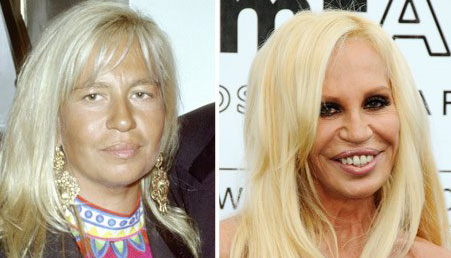
donatella_1990

This is Donatella Versace.  She apparently had procedures to her lips, nose and chin.  If she were to have these procedures, I think she appears the way she does because she might have had too much augmentation to her lips for starters.  I think that her upper lips are too uniform from the central part to the lateral part of his lips.  Really lip augmentation to the upper lip should be centered at the central 1/4 to 1/3 and then the lateral part of the lips should have some augmentation but gradually lesser from the central part. Also the upper lips should only be 1/2 the size of her lower lips.  In her case her upper lips are too big laterally and this is interpreted as not looking normal.  The lower lips are also too big laterall and should really be more centralized in the center 2/3’s.  The pucker in her lip should really be about the width of the eye at most and should be concentrated more in the middle.  I think her nose has been flattened in some way as well.  Her nasal tip is larger than it was before.  The tip is around 1 1/2 to 2 iris widths and should really be one iris width in size to harmonize with the iris and eyes.

This can be treated and fixed if she wanted to.  Depending on what was put in her lips, you can sometimes inject enzymes to remove the filler in the lips.  If they are permanent fillers then parts of her lips can be altered to make them look more attractive through minor procedures.  After the lip filler wears off, you can then Lip Augmentation in a more pleasing way.  For the nose, she could have a Rhinoplasty to make her nose smaller through cartilage grafting.  This would really depend on whether the nose was appearing the way it did because of the extra skin which would be harder to fix.

Dr Young is located in Bellevue near Seattle, Washington