Is overfilling possible with new fillers like restylane that were more likely with Collagen fillers

December 4th, 2009

Hyaluronic acid fillers (dermal fillers, dermal injectibles, restylane, juverderm, perlane) present a great option forLip Augmentation (lip enhancement, lip filler, lip injectible, lip plumper, lip rejuvenation, lip wrinkle filler/treatment). Hyaluronic acid fillers like restylane, juvederm, perlane, etc are a great way to augment the lips.  They allow accurate filling and you always have the options of using enzymes to dissolve the fillers for accurate touch ups.  I have an approach that allows me to manipulate the fillers based on how long the fillers were injected.  So poor results should be a thing of the past.  Also a knowledge of facial aesthetics is indispensable. I discovered a new theory of facial beauty, called the Circles of Prominence, which can be read on my website. Essentially, the lower lip should be at least 2 times the size of the upper lips. The puckering of the lower lips should emulate the eyes. Here is the link for my theory on facial beauty: http://www.drphilipyoung.com/pdf/circles_of_prominence.pdf.

Thanks for reading, Dr Young

Dr Young specializes in Facial Cosmetic and Reconstructive Surgery and is located in Bellevue near Seattle, Washington
Will fat grafting make me look fat and can you do fat grafting in the lower eyelid with a lower eyelid blepharoplasty?

November 17th, 2009

Fat injections (fat filler, fat transfer, fat grafting, pearl fat grafting) done right will not make you look fat just younger. Repeating the lower eyelid blepharoplasty and doing fat grafting is not a familiar course for me. I either do one or the other and I tend to do more fat grafting.  I only consider the lower blepharoplasty with fat grafting when there is an extraordinary amount of fat in the lower eyelids and this is not common.  Most of the time when you remove fat and skin from the lower eyelids you tend to look hollow there.  Fat grafting as a whole can really help this area by bringing back the volume to the lower eyelid and upper cheek area.  Also combining the two procedures can have an impact on the fat survival in my experience.  With fat grafting, I always have patients bring in photos of themselves when they were between 10-20 years old.  This helps me to determine where to put the fat.  Fat grafting will not necessarily make you look fat at all. When placed correctly, it can dramatically make you look younger.You just need to put the fat in the right places. Also browlifting is more complicated than most surgeons think.  A little can do a lot to make someone look surprised.  Many times fat grafting around the eyes, temple, and forehead can really make someone look younger in this area while elevating the eyebrows or giving the illusion that it has been elevated. You can see my before and afters at this link: http://www.drphilipyoung.com/procedures/youngvitalizer/

Thanks for reading, Dr Young

Dr Young specializes in Facial Plastic and Reconstructive Surgery and is located in Bellevue near Seattle, Washington

What percentage of body fat do you need to be a candidate for fat grafting?

November 17th, 2009

Studies looking into the percentage of body fat are not prevalent in the literature. So this hasn’t been determined accurately. Because you work out regularly and have low body fat, you might not be the best candidate for a lot of Fat Transfer(fat injections, fat transfer, fat filler, fat injectible). I would reserve fat grafting for areas that are least likely to tolerate more permanent fillers or implants.  These areas would be around the eyes and in the cheek hollow area.  The alternative for the areas other than that are sculptra, silicone implants for a more semi permanent or permanent options.  Temporary fillers can be used everywhere essentially.  Temple hollows, forehead volume loss, jaw shrinkage and sunken cheeks can be augmented with silicone implants as an option in the very thin or fit patient.  Fat can then be used in the areas that cannot tolerate these implants.

Thanks for reading, Dr Young

Dr Young specializes in Facial Plastic and Reconstructive Surgery and is located in Bellevue near Seattle, Washington

Should I do a chemical peel under the eyes or a filler first.

November 17th, 2009

Aging is in a large part due to a volume loss within the face.  As we age we lose fat within our face, our bones get smaller and our skin thickness goes down too. A simple way to look at it is that we change slowly from a grape to a raisin.  Resurfacing in my opinion should always be done after you volumize or reshape a certain area.  This is more applicable to more permanent or semi permanent filling and reshaping procedures such as face lifting and fat grafting to the face.  But I generally follow that same principle even with Facial Fillers.   Many times you will find that you will need to do less resurfacing after these more permanent procedures and semi permanent procedures. Also after these reshaping procedures, the wrinkles are less prominent and also respond better to resurfacing procedures like chemical peels and laser resurfacing because more of the surface becomes exposed.

Thanks for reading, Dr Young

Dr Young specializes in Facial Plastic and Reconstructive Surgery and is located in Bellevue near Seattle, Washington

Fat Grafting to Rejuvenate Aging Hands

November 17th, 2009

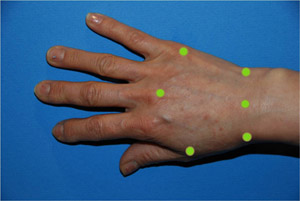
Fat grafting into the hands is a great way to rejuvenate the way your hands look in the aging hand.  When you age you tend to lose the thickness of the skin and also the fat tissue within your hands. This eventually exposes the veins and the tendons in your hands.  Many people feel, surgeons and lay people, that the face and the hands are the easiest way to figure out how old a person is.  The options for rejuvenating the hands include fat injections, temporary fillers or other grafts including alloderm, whole fat grafts, special skin grafts, radiesse, restylane, sculptra, etc.  Using implants that are not part of the body can cause problems and sometimes can have an unnatural feel.  Fat grafting is a great option to rejuvenate the aging hands while using your own tissue.  When you come in we try to determine what you are looking for when it comes to rejuvenating your hands.  We then discuss some pictures of hands to get an idea where you would like to be.  Then we discuss where we will place the fat in your hands.  At this point we can determine if we want the fat just between your tendons or also around your knuckle area to disguise these better.  We also discuss where we will take the fat from.  We harvest fat from almost anywhere in your body, including the abdominal area, the hips, butt, flanks, back, inner and outer legs and arms depending on your desires.  This is the same process that we go through when we discuss fat grafting in your facial area.  We also discuss what kind of anesthesia you would like including 1. just local anesthesia, 2. oral sedation with local anethesia, 3. iv sedation with our registered nurse with local anesthesia, and 4. more heavy iv sedation with our certified registered nurse anesthetist.    The process of fat harvesting and implantation I use is termed “Serial Timed Fat Harvesting and Transfer”.  This is a technique that I developed to maximize fat survival incorporating the latest techniques that are found across the world.  I harvest the fat with small cannulas through a very small puncture/incision under low pressure.  Then the fat is then spun in a centrifuge at the lowest speed and for 3-5 minutes.  This separates the fat into 3 layers.  The fat is then refined removing the top and bottom layers which are lysed fat cells in the top and liquid and anesthesia in the bottom layer.  The middle layer which is the most important layer of fat cells is preserved and used for fat transferring.    We then inject the fat through tiny puncture holes that heal like mosquito bites and this is done in a careful layering process to insure survival (Figure 1).  Our “Serial Timed Fat Harvesting and Transfer” is our secret which we have found has markedly increased the survival of our fat and we employ this with our fat grafting to the hands and the YoungLift for the Face.  For each hand we typically harvest 60-80 cc or milliliters and then inject approximately 10-30cc into each hand with the average being around 20 cc. One US Teaspoon is approximately 5 cc’s or milliliters. You can see a video of this on our YouTube account. When you go to our website www.drphilipyoung.com you can click the YouTube icon and it will bring you to all of our videos. Or you can use this link: http://www.youtube.com/watch?v=_Pgs7XGiWWs.

Thanks for reading, Dr Young

Dr Young specializes in Facial Plastic and Reconstructive Surgery and is located in Bellevue near Seattle, Washington

Figure 1

Figure 1

What are the different types of facelifts out there, an explanation and interesting picture are shown.

October 31st, 2009

Facelift (or face lift, quick lift, smas lift, short scar lift, facial rujevenation, thread lift, s lift, weekend lift, lunch time lift, one hour lift) is generally a procedure that lifts part of the face. It works to improve the jowl area (see figure 1),marionette lines (see figure 2), neck bands (see figure 3), neck laxity, double chin, and nasolabial folds (see figure 4). You can see the pictures showing where these anatomic structures are located. After a facelift, many of these things are improved as seen in the before and afters (see figure 5 & 6 ). There are many names for a facelift and you might have heard some of these names in the media. Essentially all facelifts including these advertised lifts that are labelled as minimally invasive all entail pulling on a layer of tissue called the SMAS or Superficial Muscular Aponeurotic System. The SMAS is the layer of tissue  that includes the facial muscles and platysma as seen in figure 7.  This layer of tissue is the layer that all facelifts lift or pull on to create the beneficial aspects of a facelift.  It does so because the SMAS is connected to other facial muscles and the pulling of the SMAS is transposed to the facial muscles that are located around the areas that need to be improved.  How do facelifts differ? They differ in terms of how much undermining the surgeon does in front of the ear, how deep the dissection goes, how long the incision is carried out and what other adjunctive procedures are included to improve the facelift results.  Most minimally invasive facelifts entail less undermining, they usually use sutures to pull up the SMAS and they limit their dissection and the extent of their incisions.  Minimally invasive facelifts that are advertised out there usually entail about 3-5cm of skin undermining in front of and behind the ear (see figure 8 blue line).  Usually they entail also sutures to pull up the SMAS after skin undermining wtihout elevating the SMAS. Most minimally invasive facelifts leave the SMAS intact and use sutures to fold the SMAS up and hence shorten the SMAS lifting the face structures.  The sutures typically grab the SMAS near the furthest part of the dissection and then are fixed and pulled to immobile tissue around the ear.  The incision typically runs above the sideburn and then between the ear and the face.  The incision can go in front or behind the tragus and then it is carried in front of the earlobe and then behind the ear normally running in the crease and then it goes along or within the hairline (see figure 8). More advanced facelifts extend their skin undermining (figure 8 Yellow line) and the length of the incision.  They are more likely to take the incision along the direction of the green dashed arrow than minimally invasive facelifts. They also are more aggressive in their treatment of the SMAS through elevation of the SMAS and further dissection underneath the SMAS. Even more complicated facelifts carry their SUB SMAS dissection (dissection under the SMAS) over the facial muscles and specifically the zygomaticus major and minor which are the smile muscles (see figure 7).  The reason for taking the dissection over the smiling muscles is to have more of an affect on the nasolabial folds.  This approach is very complicated and usually mastered by the most experienced facelift surgeons.  Here is a picture of this dissection over the zygomaticus major and minor (see figure 9 smile muscles are labeled and what you are visualizing is the zygomaticus major) which I did during an October 2009 facelift.  Traditional facelifts are also more aggressive in their treatment of the neck muscles under the chin which I will discuss in a different blog.  I hope this helps you in understanding the facelifts out there.

Thanks for reading, Dr Young

Dr Young specializes in Facial Plastic and Reconstructive Surgery and is located in Bellevue near Seattle, Washington

Figure 1

Figure 1

Figure 2

Figure 2

Figure 3

Figure 3

Figure 4

Figure 4

Figure 5

Figure 5

Figure 6

Figure 6

Figure 7

Figure 7

Figure 8

Figure 8

Figure 9

Figure 9

Is Nasal Hump Reduction a Simple Procedure. I don’t want a sloping nose but something natural.

October 20th, 2009

This is a question I answered for somone who wanted something natural done for their nasal hump but not much done for the nasal tip:

Rhinoplasty(Or nose shaping / nose reshaping / nose plastic surgery / nose cosmetic surgery / nose job)is a very difficult procedure especially when you need your nasal tip changed.  It is a procedure that takes years to master. I’ve been doing Rhinplasties for 8 years now and have come to respect this procedure.  It is a procedure that you need to continually improve on. Things change and techniques get better and you always need to learn the latest in the new ideas out there.

Nasal hump reduction is on the easier scale when you talk about rhinoplasty as opposed to tip work or reconstructive rhinoplasty. This is based on doing hundreds of rhinoplasties from the simplest to the most complicated including rib graft repair and complex nasal reconstruction type of procedures.  Nasal hump reduction will entail limited intranasal incisions, reduction of the hump with rasps, sometimes direct reduction with scissors, etc, and many times will entail controlled breakages of your nasal bones to readjust the bones to the smaller state.

Really importantly, you want a surgeon to discuss all of these things with you and know what you want. This is perhaps the most important step in rhinoplasty. Knowing what your patients/clients want is more than half the battle. This establishes the goals of this procedure which is essential.  So find somone who is going to listen to you!!

Through Rhinoplasty your appearance can change markedly for the better if done right!

I hope that helps!

Thanks for reading, Dr Young

Dr Young specializes in Facial Plastic and Reconstructive Surgery and is located in Bellevue near Seattle, Washington

Can grafts in the upper lateral area cause nasal narrowing? Can manipulating the nose bring problems to myself after rhinoplasty? How do I know my nose is infected or not?

October 19th, 2009

This is a question I answered for someone who had a Rhinoplasty and wondered about the above and whether their nose is infected or not?

The clear drainage is not likely indicative of an infection but the smells that is foul is an indication after Rhinoplasty (Or nose shaping / nose reshaping / nose plastic surgery / nose cosmetic surgery / nose job) .  As long as they didn’t use foreign material for the grafting, your chances are better that this is not an infection.  I would definitely have someone look at this to make sure it is not getting infected.  The upper lateral graft can cause impingement of your internal nasal airway if it wasn’t done in the right way.  Warping can happen to anybody and any surgeon though and this is a risk with ear, or rib grafts.  Septal cartilage is less likely.  There is a possibility of a foreign body as well that was or wasn’t meant to be in there such as suture material, guaze material etc.  In terms of bringing it on yourself, I wouldn’t suggest manipulating the nose in the way that you described unless directed by your doctor.  There are delicate sutures in there that manual pressure, depending on how forceful, can dislodge and create issues such as what you are describing.

I hope this helps!

Thanks for reading, Dr Young

Dr Young specializes in Facial Plastic and Reconstructive Surgery and is located in Bellevue near Seattle, Washington

Can Botox lead to other muscles getting larger and moving my face asymmetrically and lead to a different look?

October 19th, 2009

This is a question that I answered for someone who felt they looked different on one side from the effects of Botox

One thing is possible regarding your situation. Sometimes, people don’t notice things about themselves until they actually get something done.  This is a common thing that happens.  When you get something done, like botox, you tend to look at certain parts of your face more closely and notice things that used to be there before.  That is why doctors have become used to pointing things out to people so that this doesn’t happen after the particular procedure.  We are asymmetric for many reasons.  One thing is really interesting though.  When people look at others to asses  beauty we tend  to look at the right side of the person’s face predominately.  This is due to the fact that our right brains appreciate beauty more than the left brain.  Our visual fields are crossed and asymmetric which leads to this phenomenon. You can find this out by searching on the web for visual field pathways in the brain.  Hence, we select one another, from a sexual selection stand point, by concentrating more on the right side of the face.

In terms of the possibility that other facial muscles are working harder to compensate and then subsequently leading to asymmetric muscle movement and size differences, This is a possibility that hasn’t been looked into as much from a scientific standpoint and could be happening.  I would have to see pictures myself to really come to some assesment of the situation.  Botox could help in this regard too.  You could put botox in those muscles that you think are bigger in a very conservative way.  I would talk to your doctor or send me pictures.

I hope that helps!

Thanks for reading, Dr Young

Dr Young specializes in Facial Plastic and Reconstructive Surgery and is located in Bellevue near Seattle, Washington

What are the affects of alphagan P used for droopy eyelids after botox / dysport?

October 19th, 2009

This is what I answered for someone recently concerning Botox :

This is what is listed with the manufacturer as some of the more common potential problems:

Adverse events occurring in approximately 10-20% of the subjects receiving brimonidine ophthalmic solution (0.1-0.2%) included: allergic conjunctivitis (itchy, watery eyes), conjunctival hyperemia, and eye pruritus. Adverse events occurring in approximately 5-9% included: burning sensation, conjunctival folliculosis, hypertension, ocular allergic reaction, oral dryness, and visual disturbance.

Adverse events occurring in approximately 1-4% of the subjects receiving brimonidine ophthalmic solution (0.1-0.2%) included: allergic reaction, asthenia, blepharitis, blepharoconjunctivitis, blurred vision, bronchitis, cataract, conjunctival edema, conjunctival hemorrhage, conjunctivitis, cough, dizziness, dyspepsia, dyspnea, epiphora, eye discharge, eye dryness, eye irritation, eye pain, eyelid edema, eyelid erythema, fatigue, flu syndrome, follicular conjunctivitis, foreign body sensation, gastrointestinal disorder, headache, hypercholesterolemia, hypotension, infection (primarily colds and respiratory infections), insomnia, keratitis, lid disorder, pharyngitis, photophobia, rash, rhinitis, sinus infection, sinusitis, somnolence, stinging, superficial punctate keratopathy, tearing, visual field defect, vitreous detachment, vitreous disorder, vitreous floaters, and worsened visual acuity.

The most common issues are watery and itchy eyes that could indicate allergies, eye burning and visual problems, and eye redness.

The best thing to do is to avoid droopy eyes by injecting the botox / dysport at least 1.5cm above the orbital rims edge above the eye.  This avoid the botox from traveling to the muscle that lifts your eyelid which is responsible for the droopy eyelid that can happen if this muscle is affected.

I hope that helps you in some way!

Thanks for reading, Dr Young

Dr Young specializes in Facial Plastic and Reconstructive Surgery and is located in Bellevue near Seattle, Washington